Tuesday, April 28, 2026

A rebranding and an explanation

The lion's share of my game reviewing for the past year and a half has been over at Goonhammer.com, which is now reborn as TableTopBattles.com. They wanted their name to more accurately reflect the fact that they cover a lot more than just Warhammer. And apparently, "goon" has become a rude and unsavory word in the deep bowels of the internet (yeah, it was news to me too). 

It's just as well, I like the new name better, especially since I don't really have any interest in Warhammer -- I mainly write reviews of board and roleplaying games for them, as well as painting and strategy guides for Star Wars: Shatterpoint.

Most recently I've reviewed Quartermaster General: South Front, Perilous Tales, and General Orders: Sengoku Jidai for them. You can see a complete list of my articles here.

I do plan to keep writing reviews here, primarily for older and more obscure games, but as is already obvious, my reviews here won't be nearly as frequent.

I also write about miniatures games and painting regularly in the Projects system at OnTableTop.com. You can see a list of my project blogs in the sidebar to your right, under "More with miniatures" (you may need to switch to "view web version" if you're reading on a phone). My most current projects as of this writing are Every Game is Miniatures Agnostic, Mythic Battles -- Now in Three Flavors, and Doctor Who and the Replacement Miniatures.

As always, thanks for reading!

Wednesday, August 13, 2025

Journey to the center of the Savage Core

Portions of the text for this review originally appeared in my Savage Core Expedition Journal project blog at OnTableTop.com.

As is often the case with skirmish games, the thing that initially drew me to Savage Core was the miniatures. I was shopping for wild west figures and stumbled into what might have happened if Jules Verne and Edgar Rice Burroughs had worked together to design a line of miniatures. The Savage Core is an underground primeval jungle populated by superintelligent apes, lost Atlanteans, ice age cavemen, dinosaurs, and more.

The game looked interesting too, so I wasted no time in placing an order. In fact, I got so distracted by thoughts of pulp adventure that I completely forgot to order the cowboys I went there for in the first place...

A game of Savage Core is a head-to-head battle, with around seven figures per side. A player's force revolves entirely around their faction’s Boss, an individual character who has six game stats and a unique set of “tricks,” special abilities that can each be used once per game and are themed to that character. Your other six models (in a normal game) are “Bods,” nameless minions whose stats might vary slightly between one faction and the next but who don’t have any particular abilities of their own.

A game round starts with each player rolling for initiative to determine who will go first. Each player then gets a chance to play one of their tricks, which can be anything from devastating area attacks to causing an opposing figure to get lost in the jungle, only to reappear on a later turn.

The first player moves all their models, then the second player moves, then the first player makes all their attacks, then the second player. Going first isn't an advantage, as the second player will have the opportunity to move out of range before you get a chance to make any attacks. The only thing that can possibly help with this is the fact that movement distance for each figure is random, with each model rolling a d10 and adding their Clip (movement) value. So if you move into position for a great ranged attack, you can at least hope that they don't roll high enough to get away. It might sound fun in theory but in practice it can be pretty aggravating.

Combat in Savage Core is resolved first by an opposed roll using the relevant stat (Moxie for ranged or Buff for close combat) plus a d10 roll to see if the target is hit. After all hits have been determined, the targets roll for each successful hit to see if they’re wounded. Bods die after one wound, but Bosses can take four or five before they go down. Damage is resolved at the end of the round, so if one of your characters gets eliminated they’ll still get a chance to attack before they go.

By far the most interesting thing about Savage Core is Double Trouble. On any round that both players roll the same number for initiative, it triggers a random encounter taken from a list that can include anything from a wave of lava creeping across the board to a ravenous T-Rex stomping out of the bushes and eating any models it comes into contact with. Double Trouble is what got me interested in the Savage Core rules set in the first place, and it is easily the most fun and interesting thing about the game.

These encounters add a lot of flavor and enjoyable chaos, but they don’t happen nearly often enough in an average game. We were lucky to get one on our first turn, but in our previous match we didn’t get one until the last round, when it was too late for it to have any appreciable effect. And it’s certainly possible to go a whole game without having one at all. There is a scenario in the rule book called “Rumble in the Jungle” that has a Double Trouble encounter happening every single turn, but that seems like a bit too much.

I do like how simple the game is -- there's not a lot you have to remember, with only one named character on each side, and the six once-per-game abilities still provide a fair amount of flavor and variation between the different characters. It’s not like Shatterpoint, where you really have to stay on top of the synergies between characters, or Knight Models’ Batman, where each character has so many complicated special abilities that it’s impossible to keep track of it all.

On the other hand, the game can (and does) swing wildly based on the egregious amount of die rolling. Successful hits only result in damage half the time (even less for ranged attacks), which can be frustrating. Additionally, most of the the more powerful and interesting trick cards require a seemingly arbitrary die roll in order to work, and there is generally no way to mitigate these rolls. And don’t get me started on rolling for movement...

It might just need an attitude adjustment to make peace with the randomness of it all and enjoy Savage Core for what it is. But this is still a miniatures wargame that require a hefty level of preparation in the form of assembling and painting models and terrain -- the game play needs to be substantial enough to justify all that work.

Rating: 3 (out of 5) There are a few great concepts here, and the setting and miniatures are magnificent, but the core mechanics revolve around completely arbitrary die rolls a little too much.

Wednesday, August 6, 2025

A kinder, gentler wild west: Old West Empresario

There are a few games in my collection that I would classify as “comfort games” – games I’ve played enough times, and with relatively simple rules, that I don’t need to worry about re-learning the game when I sit down to play. These games tend to be relatively non-confrontational, but not often cooperative, as co-op games tend to ramp up the difficulty to compensate for the lack of a thinking opponent. No, I’m talking about games that are relaxing to play, maybe after a stressful day or on a lazy weekend, competitive but not overly confrontational.

One of my favorites in this category is Old West Empresario, a sadly out-of-print game about building a town in the old west. The western theme appeals to me, but what appeals to me even more is the simple but engaging game play.

Like a surprising number of wild west games, this one is about building a town. The game starts with 12 tiles, representing buildings, in the center of the table. These are in groups of two, with each group numbered one through six (identified by a number tile). The rest of the tiles go in the box lid or a bag, to be drawn randomly throughout the game. Each player starts with a Town Hall and a random tile, which begins the game on its unconstructed side, and also a character with a unique game ability, and three coins. Additionally, the game begins with three sets of two Wanted cards, each of which will reward the first and second player to accomplish particular objectives.

At the start of each game round, the starting player rolls a number of six-sided dice: two for each player plus one extra. These dice are placed next to their corresponding set of tiles in the center of the table. On each player’s turn they choose one of the remaining dice and either take a tile from that die’s set, or use the die to activate their town (more on that in a moment). The die is then discarded, and after each player has taken two turns the last remaining die is used by all players to activate their towns.

When a tile is taken, the player can either discard it to gain three coins, or place it in their town on its unconstructed side – the building it represents will still need to be built. Tiles must be placed adjacent to other tiles. A lot of the game’s strategy is in where you place particular types of buildings, as many of them will give income, end-of-game victory points, or other bonuses based on what buildings they are adjacent to.

But buildings still have to be built, and this is where activating your town comes in. Instead of taking a new tile, a player can use their turn to choose a die and then activate all the constructed buildings in their town that are marked with the number shown on the die. Early on this will be your town hall, which allows you to construct the other buildings that you’ve placed, but eventually you’ll have a range of different options such as gaining townsfolk or coins, collecting extra tiles, or even forcing your opponent to lose a coin with the dreaded Undertakers (which also causes you to lose points at the end of the game if it’s too close to the center of town).

Since you only get to activate the buildings that match the die you’ve chosen, you have to think carefully about which tiles to place in your town. If you end up with a lot of the same number you’ll get to do a lot when that number comes up on a die roll, but if it doesn’t, you won’t be able to do much on your turn. You also have to think about when to choose and place certain tiles, since their neighboring buildings will affect how many points they’re worth a the end of the game. But if you wait too long to grab that tile, one of your opponents might get it first.

The game ends when one player has 15 or more buildings in their town, or when a pre-determined number of townsfolk counters have run out. The townsfolk are a secondary currency used to pay for some game effects, and are also worth victory points. Additionally, the artwork on them is adorable, and eagle-eyed players might just recognize a few of the characters...

Maeve and Dolores from HBO's Westworld.

Townsfolk from Old West Empresario.

The only direct competition is the available dice and tiles each turn, and the Wanted cards which offer extra points to the first and second player who hit specific achievements such as having a certain number or type of buildings in their town. So it’s fairly non-confrontational and puzzle-like, but in a good way Honestly I like it better than similar but more complex games like Carson City, especially when considering its effort-to-entertainment ratio. The amount of decision-making hits that sweet spot where you always feel like you have good options, without descending into the dreaded analysis paralysis.

Sadly the game’s publisher went out of business a few years ago, and I don’t think it made enough of a splash to entice anyone else to pick it up for a reprint. But there seem to be plenty of copies out there, on eBay and in the used games market.

Rating: 4 (out of 5) One of those great “simple but engaging” games that we might not play all that often, but is always a joy when we get it to the table.

Tuesday, July 29, 2025

Get all the animals living together happily in Harmonies

Harmonies is one of those rare games that lives up to the phrase "deceptively simple." Placing tiles on your board to match the patterns shown on your cards sounds simple enough, but this game uses its theme, the idea that an ecosystem is a balance of interlocking pieces, to give players a bit more to think about when they're selecting and placing their tiles.

A game of Harmonies starts with five sets of three random tiles in the center of the table. Each player has their own small board, a grid made up of hexagonal spaces in either a 5x5 or a 4x7 pattern. There is a spread of four cards with absolutely stunning artwork by Maëva da Silva, depicting a range of animals from penguins to meerkats. Each card shows a specific pattern of tiles needed in order to place a cube representing that animal. The patterns will usually involve placing two or more tiles of different colors (representing terrain such as mountains, grasslands or water), but the cube only occupies one of those tile spaces -- there can only be one cube placed on a tile, but patterns that use the same colors can intersect, neatly demonstrating how different animals share the ecosystem they live in.

Players take turns, first choosing a set of three tiles to place, and then choosing a card from the spread. Each player can only hold a maximum of 4 cards at a time, so you have to be careful to pick cards with patterns that complement what you already have in play. Each card comes with between two and five cubes, to be placed each time the player manages to form that card’s pattern on their board. The more times a player is able to create the card’s tile pattern, the more points the card is worth, and when all the card’s cubes are placed, the card is moved to a separate victory pile, making room for a new card.

There is a lot to think about over the course of the game. You want to choose complimentary animal cards, but that doesn’t necessarily mean cards that use the same types of tiles – you also have to look at which tile in the card’s pattern the animal cube needs to occupy, so you can try to place the most cubes using the fewest tiles.

When choosing tiles, there are five sets of three random tiles to choose from. The catch is that a player must place all three tiles on their board right away, so there is a lot of anticipating where to place the tiles that you don’t need right now so that they’ll be useful on a future turn.

At the end of the game, players score based not only on their animal cards, but also on the type, quantity and patterns of the tiles they’ve played. Mountains score more if they’re connected in a range, and also if the tiles have been stacked to form higher mountains. Trees score based on their height, and rivers based on their length. Players have a lot of options for how they want to play: go for long rivers or high mountains, and seek out animals that will fit in those environments, or look for combinations of animals that can be placed as densely as possible.

Harmonies is very similar to Habitats in theme, look, and game play (although the artwork in Harmonies is definitely nicer), but I think they’re different enough that I won’t mind hanging on to both games. Habitats makes more of a game out of how the tiles are selected, where Harmonies is more about planning for how you play the tiles in order to maximize their position on the board. On balance I find Habitats to be a little more mechanically interesting, but Harmonies is just more delightful in terms of the artwork and overall attractiveness of the components.

Rating: 5 (out of 5) Whenever I finish a game of Harmonies I almost always want to play it again. Everything about the game is just pleasing, from the gorgeous artwork to the simple but high-quality wooden tiles.

Tuesday, January 28, 2025

Marvel D.A.G.G.E.R. and the importance of perceived value

Marvel D.A.G.G.E.R., a cooperative board game in the same vein as Arkham Horror or Pandemic, was released by Fantasy Flight Games in 2023, with very little fanfare. There wasn't much marketing for it that I can recall -- the first time I remember seeing it was in a local store, and while the game looked interesting, I balked at the $90 price tag, which (if the prevailing discussion on BoardGameGeek upon its release is any indication) is what many potential buyers did. I eventually picked up a used copy for a much more reasonable price.

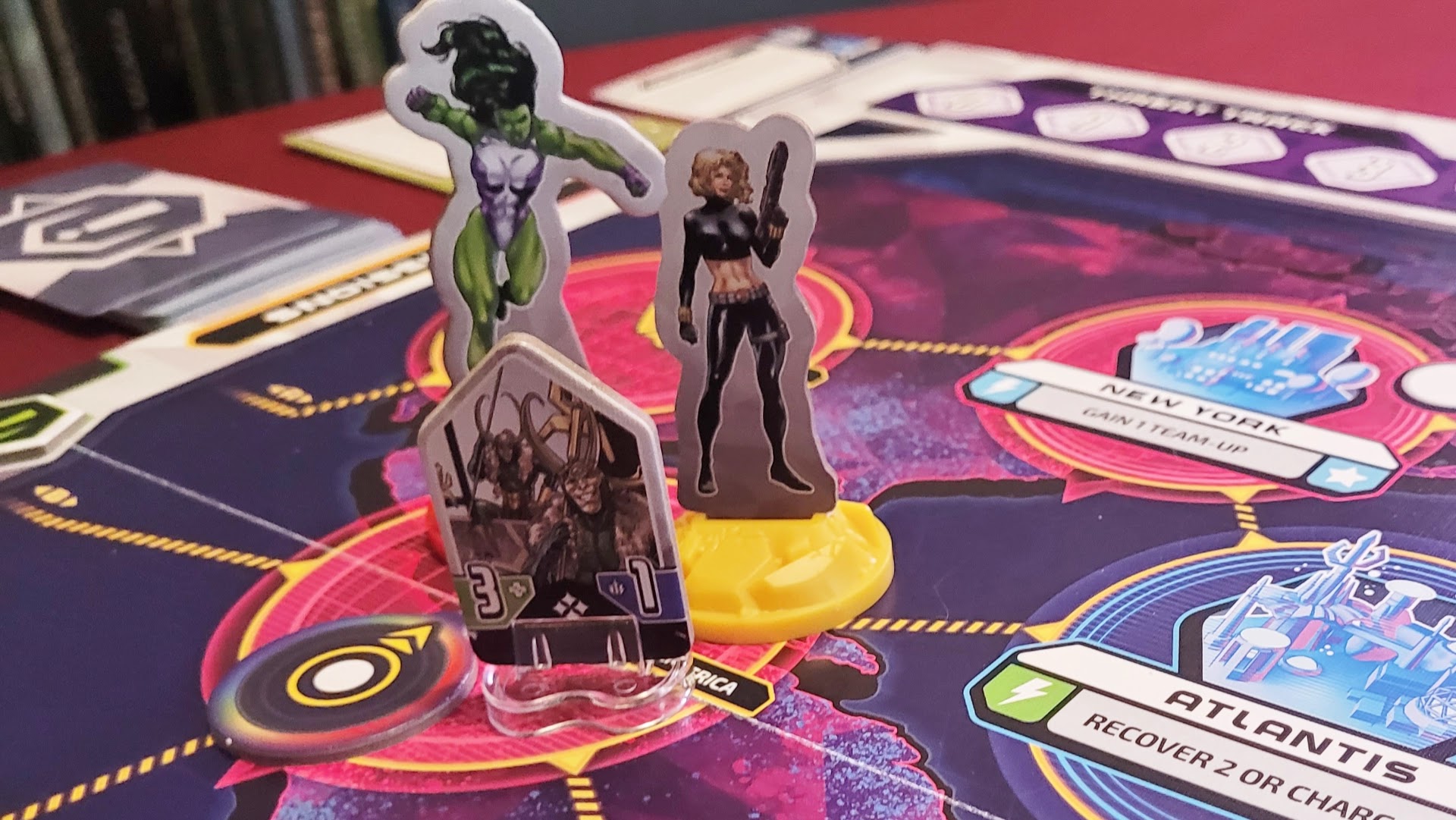
The game itself is quite engaging. It does indeed play a lot like Pandemic or Arkham Horror/Eldritch Horror -- players take on the roles of Marvel superheroes attempting to stop one of four powerful supervillains from destroying important locations such as New York City, Wakanda, and Atlantis. Each villain has its own particular way of spreading their minions across the board, giving the heroes foes to fight and tasks to perform in a race against time.

Over the course of the game, the players will have three villain-specific missions to solve. These usually involve moving to a specific location and passing a dice-rolling test, or doing a particular action a set number of times. Each hero also has their own side mission, which will reward them with an in-game bonus if they complete it, and the game will deal out more general side missions such as defeating less powerful supervillains. Meanwhile, at the end of each turn a threat tracker counts down based on how many locations have been destroyed, and how many villains are in play -- this tracker acts as a timer, giving the players a limited number of turns to complete each mission.

Once all the main missions have finished (pass or fail), the heroes enter into a final showdown with the villain, which plays out differently depending on who you're fighting.

There are 20 different heroes to chose from...sort of. The game leans into the legacy aspect of many of Marvel's characters, where a new personality will take over a well-known identity like Captain America or Spider-Man. Each hero card is double-sided, featuring a different version of the hero (or a similar hero) on each side: Sam Wilson or Steve Rogers, Iron Man or War Machine, Hulk or She-Hulk, and so on. You choose which one to start with, but if you character is incapacitated during the game (which happens often), you flip the card over as the other version of the character steps in to take over.

In addition to heroic identities, each player begins with one of six aspect cards. These are descriptors such as Protection, Vigilance, or Justice that put a different spin on the game's four basic actions. It adds a lot of interesting variety to the game and should substantially increase replayability, as players will be able to try out all the different hero/aspect combinations.

Thematically it's very similar to the Marvel Champions card game, carrying over the hero/aspect idea as well as the structure of heroes acting cooperatively to defeat a game-controlled villain. But Marvel Champions tends to emphasize the individual players acting based on the strengths and weaknesses of their deck, while Marvel D.A.G.G.E.R. requires a much more Pandemic-like, teamwork driven approach.

It doesn't quite have Arkham Horror or Eldritch Horror's depth of story, but that's not really a problem. Most players will be familiar with the back stories of the Marvel heroes and villains in the game, and if they're not, the game includes a handy booklet detailing each character's biography. One of my biggest problems with Eldritch Horror was the breakneck pace of the game -- I never felt like I had time to just explore the world and its storylines. With Marvel D.A.G.G.E.R. I already know the characters, so I'm happy to focus on being in the moment and defeating the villain. The sense of urgency is fun rather than stressful.

So what went wrong with Marvel D.A.G.G.E.R.? While it is still in print and available from the publisher, the consensus seems to be that it is a failed product and not likely to receive any further support in the form of expansions or promotion. Well, as mentioned before, the first problem is the price. Board games have gotten steadily more expensive over the years since, say, Arkham Horror second edition or the original Pandemic came out. Some of that is just general inflation, and a lot of it is being blamed on post-pandemic supply chain issues, specifically drastic increases in printing and especially shipping costs.

The game has a generous amount of content, with hundreds of full-color cards and counters, but it does feature cardboard standees in place of the plastic miniatures that have become fairly standard issue for this type of game. Although the truth is likely a lot more complicated, there is a perception that cardboard is less expensive than plastic, and therefore a game featuring standees instead of miniatures should cost less. In reality, the vast bulk of a game's cost is (or at least, should be) down to its design and development.

I think it's possible that a lot of the game-buying public has grown accustomed to Kickstarter games that tend to be lavish productions but also labors of love from small companies or individual designers -- the asking price of these games covers their production costs but not necessarily the hourly labor that went into creating the game's ideas and mechanisms. Put another way, when people are assessing the value of a game, they're often only looking at the relative amounts of cardboard and plastic. In any case, Marvel D.A.G.G.E.R.'s asking price was just more than the market would bear.

Cloak & Dagger by Rick Leonardi. © Marvel.

The other problem with Marvel D.A.G.G.E.R. is the title -- it's terrible. It doesn't give you any idea of what the game is about. While the game's logo explains that D.A.G.G.E.R. stands for "Defense Alliance for Global and Galactic Emergency Response," it seems like they could have come up with something less clinical and more exciting. Besides, Marvel's Dagger isn't even in the game...

Rating: 4 (out of 5) If you've ever thought that Pandemic or Arkham Horror would be more fun with Marvel superheroes, this game is probably a good bet for you, and a lot of online retailers have it for a much more reasonable $50 or less.

Wednesday, November 13, 2024

Also by the same author

 If you've noticed that I've fallen off a bit on game reviews, it's because I've started writing for Goonhammer, a gaming news website that mainly covers Warhammer and other miniatures games, but also features material on board games and RPGs. So far I've reviewed Rock Hard: 1977, The Mandalorian Adventures (also reviewed here on 120 Games), and Star Wars: The Deckbuilding Game Clone Wars Edition. I've also done some deep-dives into Star Wars: Shatterpoint.

You can see a complete list of my Goonhammer articles here. I hope to divide my review-writing energy between here and Goonhammer, with reviews of new games going there while I work on reviewing my backlog of older games here.

I've also been writing extensively about 1980s comics over at 1986comics.com.

Wednesday, October 23, 2024

Couture, a surprisingly fun card game about runway fashion

Last year I backed a Kickstarter campaign for a set of four small box games. The two that I was really interested in were Chomp (dinosaurs, need I say more?) and Sail (a two player cooperative game about sailing and navigation). I could have just pledged for those two, but the price was only a little bit more for all four games. Couture, a fashion themed card game, was the one I was probably the least interested in, but it has turned out to be my favorite in the set, and I've played it more than any of the others.

Couture is an auction game in which each player starts with a hand of four cards: two basic cards with a value of one each, an "iconic pose" worth two, a "signature walk" that's worth three. Each round begins with a spread of nine cards from the main deck, in columns of three separated by tiles indicating which fashion-forward city they are in: New York, Paris, or Tokyo. Players will bid cards from their hand for each of the three cities, with the winner taking their choice of card, then the second place bidder, and so on. Of course, there are a few catches that keep the bidding interesting.

Cards from the main deck fall into two broad categories: bid cards and scoring cards. Bid cards are added to the player’s hand, sometimes at the expense of discarding a hand card. They tend to have higher values for future bids, but sometimes they carry a cost, for example, the Agent card has a bidding value of four, but causes the player to lose two points if they still have it at the end of the game. An Assistant card, on the other hand, is worth zero for bidding but adds one victory point. Part of the strategy of the game is to control when to retain and when to discard certain hand cards.

Scoring cards do just that, score victory points. These are worth points on their own, but some score more when collected in particular sets. Streetwear cards each have a matching card, with an immediate bonus given to the first player with a matching set, and a lesser bonus for the next players to do the same. Ready to Wear and Haute Couture cards award extra points at the end of the game to whoever has collected the biggest variety of brands and largest sets of individual symbols.

But beware the dreaded Flop cards, which subtract points for the players with the most, next most, and so on. How would you end up with a Flop? That’s one of the key points players need to figure out when deciding how much to bid in each city. Bidding is a single round and simultaneous, with players arranging their hand cards separated by city cards so that it’s clear which cards have been used in which city, without revealing how many cards have been bid for each. It is allowed to bid zero cards.

When bids are revealed, the player who bid highest gets the first choice for that city. Then the next highest bidder chooses, and so one. There are three cards for each city; if there are fewer than three bidders in a city, the winning bidder takes the remaining cards, and if there is only one bidder that player takes all three. So if there is even one Flop in a particular city, you have to be thoughtful in how you bid, as it’s often better to come in second or not bid at all.

While the theme isn’t something I’m particularly interested in, it doesn’t overwhelm the game, and the fashion design style illustrations are quite nice. I imagine players who are enthusiastic about high fashion will find it even more engaging, and in any case the more “grown-up” theme and relatively straightforward game play could make this a hit with non-gamer friends and relatives.

Rating: 5 (out of 5): Although it’s relatively simple, this is a very engaging and accessible game, great for playing at a noisy pub or family get-together.

Thursday, October 10, 2024

Chomp! A game about herding dinosaurs

Why do dinosaurs seem to have such an enduring appeal? I think it’s the idea that, once upon a time, there was a world teeming with thousands of varieties of fantastical, dragon-like creatures, untouched by human mediocrity. And that world wasn’t dreamed up by a novelist or game designer. It was real, at least as far as the reasonably dependable science of paleontology can tell us.

I’m not sure if Chomp, a small box tile laying game published last year by AllPlay, quite captures the majesty of prehistory, but it is a pretty fun little game.

The game consists of 36 double-sided tiles, plus a handful of tokens and a lovely dry-erase board (pen included!) for keeping score. The tiles depict herds of carnivorous or herbivorous dinosaurs in different sizes, lush vegetation, nests, watering holes, and tar pits in various combinations of two, three or four shapes. Sometimes the different elements on a tile are separated by mountains, sometimes not. The idea is to draw and place tiles in order to form larger herds of same sized dinosaurs, making sure they are adjacent to food sources – vegetation for the herbivores and watering holes populated by unwitting prey for the carnivores. But you have to keep an eye out for tar pits, as they are certain doom for your dinosaur herds.

It’s the tile placement that’s particularly interesting in this game. Tiles can be placed overlapping other tiles, as long as the grid is maintained and individual elements are completely covered. This means you can pivot your strategy more easily than in most traditional tile-laying games, perhaps placing a tile that’s good but not ideal in the hopes of covering up some or all of it later in the game. 

On the reverse side of each tile is a bonus scoring condition, granting extra end-of-game points for things like having the most of a particular size of dinosaur, or even having the most uncovered tar pits among your tiles. At the start of each player’s turn there will be three face up and three face down tiles to choose from. Players can choose either on their turn, balancing the need for more layout tiles with the ability to score extra bonus points.

The game goes for eight rounds, after which each player has to check each of their herds to see if they are made extinct by an adjacent tar pit. Remaining herds must then be fed from an adjacent food source, with carnivores eating herbivore herds if no other prey is available. All adjacent dinosaurs of the same size and type, no matter how many, count as one herd. Each herd only requires one adjacent food source, so the challenge is to maximize the tile placement for large herds to take advantage of a single source of food. The bonus tiles provide some guidance for which types of dinosaur herds to go for and how best to try to lay out your tiles.

Any herds who can’t eat are made extinct, after which all the surviving dinosaurs are counted up for points. Larger dinosaurs count for more points than smaller ones, but also take up more space on their tiles and so are theoretically more difficult to place efficiently.

Rating: 4 (out of 5) Like most tile-laying games, Chomp has a fun puzzle-like quality to it, and I really like the idea that you can cover up some or all of your previously placed tiles if your strategy is moving in a new direction.

Wednesday, September 18, 2024

Call it what you want, it's Star Wars Pandemic

Pandemic took the board gaming world by storm when it came out in 2008, quickly unseating Settlers of Catan as the go-to game for bringing new players into the hobby. Its success is down to several factors: it's an enjoyable, well-designed game, the theme is relatable and not too nerdy (no wizards, space ships or tentacle monsters), and the cooperative nature of the game opened it up to a whole new group of players who may have been traumatized by too many overly competitive games of Monopoly when they were children. Additionally, 2008 was the start of a board gaming renaissance that saw board games move out of the toy and hobby stores to become a mainstream product with wide market visibility. You can now buy Pandemic at my local grocery store.

Re-skins with different themes were a logical way to expand the game's appeal, and although it hasn't got anywhere near as ridiculous as all the tie-in versions of Clue or Monopoly, a Star Wars edition of Pandemic was probably inevitable. What's weird is that it isn't called Star Wars Pandemic or Pandemic: Star Wars. It's just Star Wars: The Clone Wars, with a surprisingly small "Pandemic System" logo in a bottom corner of the box.

Other than the Fall of Rome version I haven't played much Pandemic -- the theme just never particularly appealed to me. I can't really talk too much about how Star Wars: The Clone Wars is different, but I can say that it is definitely, recognizably Pandemic. The world map has been replaced by a map of the Star Wars galaxy (although probably not a particularly accurate one), players play Jedi Knights rather than aid workers, and the diseases are now armies of battle droids. The way the cards work is a little different too, with a mission system replacing the set collection from the original game.

When setting up a game of Star Wars: The Clone Wars, players choose a boss villain to play against, either Darth Maul, Count Dooku, General Grievous or Asajj Ventress. Each boss comes with their own unique deck of 6 cards that dictate how they will behave in the game, so players will need to adjust their strategies depending on which villain they are facing.

A deck of location cards determines where groups of battle droids will appear throughout the game. If a planet would ever have more than three, it instead gets a blockade ship that must be destroyed before any battle droids. Additionally the threat meter advances by one -- if the meter ever goes past six, the players lose the game, so managing the number of battle droids is critical.

The main innovation over regular Pandemic is the addition of missions that the players need to work together to accomplish in order to win the game. Each game starts with a certain number of mission cards based on the desired difficulty level, anywhere from three to six or more, with two missions revealed at a time. Missions generally involve going to a particular planet with a lot of a certain kind of resource, either clone troopers or ships. Once the required number have been completed, the boss villain shifts into finale mode, giving the players one final objective in order to win.

The game evokes its theme very well, with Jedi Knights fighting off armies of battle droids as they swarm across the galaxy. If I wasn't already familiar with the basics of Pandemic I would think it had been designed specifically as a Clone Wars game. The missions help with this feeling -- episodes of the Clone Wars television series were often about the heroes trying to achieve some objective while the war rages in the background, and that's just the feeling you get as you try to mitigate the swarming droids while trying to get your missions done.

It's a good Star Wars game, and a good version of Pandemic. Like most cooperative games it can fall victim to the "bossypants" syndrome, where the player with the most experience (or the most aggressive personality) tells everyone else what to do rather than letting them decide for themselves. But, just like the original Pandemic, the game play is easy to understand, with a fair amount of strategic depth and meaningful decision making -- it should be a great game for Star Wars fans who might not be dedicated board gamers...yet.

Rating: 4 (out of 5) A great use of both the Star Wars theme and the Pandemic game mechanisms.

Monday, August 26, 2024

Race, crash and shoot your way to the finish with Thunder Road: Vendetta

How many racing games is too many? I'll let you know when I find out, but so far I don't seem to have reached my limit.

Restoration Games has carved a sub-niche within the hobby gaming world by refreshing classic board games with updated game mechanics, components, and graphic design. They worked wonders transforming Star Wars: Epic Duels into Unmatched, and now they've given their restoration treatment to Thunder Road, a fairly obscure post-apocalyptic racing game that was originally published in 1986.

I never played the original Thunder Road, so I can't tell you what has changed with the new Thunder Road: Vendetta, but the game play in the restored version is very smooth and simple. Each player gets three cars, one helicopter, and four dice. The board is made up of three randomly chosen tiles laid out in a row, with spaces laid out in a hexagonal pattern. Cars can move straight ahead or forward to the right or left -- never backward, this is a race after all. The road is littered with hidden hazard tiles as well as visible obstacles such as mud puddles and rock formations that can slow your car down or destroy it all together.

Each turn, players roll their four dice and take turns assigning them to their cars. The number on the die determines how far the car moves -- it must move the full amount, this is a race after all. The fourth die can be assigned to one of a few extra options, such as nitro boost to make the car go faster, repair to remove damage, drift to allow it to glide past other cars without crashing, or the dreaded helicopter.

Helicopters are able to appear anywhere on the board and shoot at your opponents' vehicles, or even your own if they are in the way -- this is a race, after all. What's more, if a car ends a move in the same space as a helicopter, it is immediately destroyed and removed from play.

After moving, if there is another car in front of yours, you can try shooting at it. Each player has 3 different sizes of cars, with the smallest being the hardest to hit but the easiest to push out of the way by crashing into them. Damage is dealt via a stack of tiles that will generally have a one-time effect and then linger as damage counters. If a car takes two damage it is immobilized until repaired.

Crashes are probably the most fun part of the game. When a car enters another car's space, it is placed on top of the other car and then two dice are rolled: one determines which of the two cars (top or bottom) is moved, and the other indicates what direction. In this way, cars can get knocked into other cars, causing a chain reaction of crashes. They can also get knocked into rock walls or off the board entirely, either of which results in elimination.

The aforementioned hazard tiles add even more chaos to the game. They're hidden until a car moves into one, and they can be anything from clear patches of road to land mines. Often a player will be faced with a choice of either moving into a hazard that could be harmless or even helpful, or taking a safer, more predictable path around. Just as often, there's no choice at all, leading to all manner of hilarity with mud puddles that slow your car down, oil slicks that send it careening off in a random direction, or wreckage that triggers more crashes.

As soon as a car reaches the edge of the third tile, a new tile is drawn and added to the track. Then, any cars that are still on the first tile are eliminated from the race, and that tile is removed from play. This continues until one player has had all of their cars eliminated. At that point, the edge of the third tile is the finish line, and the first player whose car crosses it is the winner. It's a great way to take the sting out of player elimination as a game-ender, since the eliminated player will normally only have to wait one round (often less) for the game to be over.

Rating: 5 (out of 5) Thunder Road: Vendetta is a little on the egregious and random side, but nonetheless it is a lot of fun, and makes for an excellent, low-entry-point alternative to more complicated games like Car Wars or Gaslands.

Note: I highly recommend the Carnage at Devil's Run expansion if you can find it, it adds new hazards and road tiles that push this game from good to great.


Wednesday, August 14, 2024

Dive into yet another corner of the Star Wars universe with The Mandalorian Adventures

I never seem to get tired of "moving guys around on a map" games. One of the oldest games in my collection is Leading Edge's 1989 AliensUnmatched and Core Space are among my current favorites, and that's not even getting into "proper" miniatures games with three dimensional terrain like Star Wars: Shatterpoint or Gangs of Rome.

The Mandalorian Adventures is definitely on the light end of games of this type. It's a cooperative game that asks players to take on the roles of characters from the Disney+ series and work together to complete missions based on episodes from the first season of the show. The game makes use of a spiral-bound book, with each two-page spread consisting of a map and its game objectives plus any special rules needed. The missions tend to be fairly simple variations on finding a particular item from among several face-down tokens and then escaping off the edge of the map.

The game uses cardboard standees rather than plastic miniatures, presumably to keep the production costs down. Even as a dedicated miniature painter I didn't mind this at all -- the artwork on the standees matches the other game artwork, and it meant I could get playing without having to take extra time for painting.

Each character uses a unique deck of cards to perform actions in the game, with the number on the card determining how effective the action is. For example, play a four for movement and your character moves four spaces; play it for attack, your target takes four damage. Some of the cards also include special game text that is resolved if that card is used for a particular action -- this is what makes the different characters distinct from each other, with some relying on stealth, and others on greater mobility or simple brute force.

Enemies are represented by tokens on the board, each with a type (either a melee fighter, a shooter, or a sniper), a number of wounds required to eliminate them, and a special ability that resolves when a player character moves near them.

One of the game's more ingenious innovations is the game mechanic for activating the enemies. Each time a player uses a card to perform an action, that card goes in a pile that is specific to that action. Once the numbers on the cards in a particular stack add up to 5, a card is drawn that will cause a particular type of enemy to either move towards or attack the closest player character. If the total adds up to 6 or more, it also triggers a "crisis" event that is specific to the scenario being played, usually something  that will make things more difficult for the players. This forces the players to consider their actions each turn carefully: they'll need to try to spread out their actions as much as possible among the different choices, and also to consider when to play a particular action. Normally, game-controlled enemy actions are fairly arbitrary in cooperative games like this, but here the players can mitigate that with their choices. It makes the game a lot more interesting.

As "hobby" board games attempt to reach a wider market, designers are faced with the reality that their games might be a bit much for people whose only previous experience is with family games like the dreaded Monopoly. Many designers have chosen to address this issue by instructing players to start out with a series of tutorial games that dole out the game's concepts and mechanisms gradually. Normally I don't care for this sort of thing (although I do recognize its value), but The Mandalorian Adventures implements the idea well. The game includes a deck of cards in a fixed order that are meant to be worked through over the course of the first six games. Whether the players win or lose, after each game they are introduced to new content that will make the game a little more complex and improve its replayability.

Rating: 4 (out of 5) A very fun little game that should be accessible to a much wider audience than something like Shatterpoint or even Firefly Adventures.


Wednesday, August 7, 2024

Race to the finish with Heat: Pedal to the Metal

I'm a few years late to the party with regards to Heat: Pedal to the Metal, which is ironic given the game's subject matter. I've never been particularly interested in race cars or racing, but recently a few things have happened that may be changing my mind. One was Lacorsa, a beautifully designed racing game that lured me in with its deluxe components and simple but elegant game play. Another was Michael Mann's excellent film Ferrari, which is about the Italian car magnate and features a plot that revolves around a high stakes race.

It may be just as well -- Heat was extremely popular right out of the gate when it was released towards the end of 2022, so much so that stores around the world were having a hard time meeting demand. By the time I got to it, there wasn't any problem finding a copy as it has become a ubiquitous fixture at most local game stores. After I got a chance to get it to the table and play a few games, I could see why it was such a phenomenon.

It's a simple enough game, and mostly what you would expect. The board represents a race track (there are several to choose from) and the goal is to be the first to get your little plastic race car across the finish line after a set number of laps, usually two or three. Each player gets their own deck of cards that govern how fast and far their car can move. The faster your car is going (represented by what gear it is in), the more cards you play each turn. It seems simple, right?

The trick is that you need to slow down to get around corners, and this is where the real game lies. You have to look at your cards, and at your car's position on the track relative to the next sharp curve, and figure out how to slow down without falling behind the other cars in the race. Your deck consists mainly of cards numbered zero through five, and these are what you use to move. Each turn you have to play a number of cards equal to the gear your car is in -- no more and no less. Normally you can only shift up or down one gear at the start of each turn, but you can shift an extra gear by adding heat cards to your deck.

Heat cards are the primary currency of the game. Each player starts with six in their "engine," a separate pile next to their deck, and one already shuffled in with their other cards. Heat cards in your hand can't be used for anything, so they clutter up your hand and limit your options each turn. The only way to get rid of them is to cool down, which usually means spending a turn in first or second gear. The most important thing you do in the game is manage the back and forth of using heat, because...

Each corner on the track has a speed limit number attached to it, depending on how sharp the curve is. If your speed (the total of all the cards you've played at the start of the turn) is higher than the corner's speed limit, you have to take on heat cards equal to the difference. If you don't have enough heat, you spin out, which means your car stops at the beinning of the curve and is reduced to first gear. Plus, you have to take on stress cards, which make your speed unpredictable by generating a random number when played. The more stress you take on, the harder it gets to control your car.

The game is thrilling, in a way that not many board games are. The feeling of trying to decide how fast you can take an upcoming corner, or of knowing that you can't slow down enough, can't be a million miles away from what it's like to actually drive a race car. It's very easy for me to see why this game is so popular and well reviewed. It hits that sweet spot of being simple to play but extremely engaging.

Additional modules allow the game to be played with customized cars, weather conditions, and a multi-race tournament series. Additionally, the game has a simple but effective way to add non-player cars in order to fill out the track when you have a smaller player count. A recently published expansion adds new tracks, components for a seventh player, and rules for driving in the rain.

Rating: 5 (out of 5) A phenomenally well-designed game that brings all the excitement of racing whether you are a fan of the sport or not.


Monday, July 22, 2024

Habitats, a game about good animals making good neighbors

I'm not overly interested in computer or video games, but every once in a while one comes along that catches my interest. In the early 2000s I was quite fond of Zoo Tycoon, a zoo-building game that covered everything from building well-balanced enclosures to managing crowds and balancing income and expenses. My favorite part of the game was building enclosures for the animals; you had to balance different kinds of terrain, topography, and just the right type and amount of trees and bushes to keep the animals happy.

Zoo Tycoon board game came out last year, but I found it to be a little too fiddly and complicated to be enjoyable. I started looking around for another game that would scratch the same itch. Ark Nova is a great zoo game and includes some of the building element that I enjoyed in the Zoo Tycoon computer game, as do Dinosaur Island and DinoGenics, although they are more focused on cloning dinosaurs and stopping them from eating your park visitors.

I recently stumbled across Habitats, a game from a small publisher based in the Netherlands that has since been reprinted in the United States. And I must say, it is exactly the game I wanted.

In Habitats, you're managing a nature preserve rather than a zoo, so the thematic goal is entirely to create an environment that your animals will be . It's a tile-laying game with one really interesting innovation: the way each player picks up new tiles to play. The game starts with a grid of tiles in the center. Each player has a jeep meeple ("jeeple" just seems too precious) that moves around the grid, one tile at a time. On your turn, you can choose a tile that is ahead or to the left or right of your jeep. After choosing a tile you move your jeep into the tile's space, and then place a new tile in happy withthe space you just vacated. It means that you have a choice of three tiles to pick from each turn, but it also adds a lot of interesting strategic decision-making to the game. There might be a tile you really want that you need to move through a few less desirable tiles to get to, or you might be racing to a particular tile in order to get there ahead of your opponent.

Most of the tiles represent both an animal in search of a suitable habitat, and a type of terrain that adjacent animals might want. Tiles are played in a grid pattern in each player's tableaux. An animal tile will indicate one or more types of terrain, either water, desert, grassland, or forest, that need to be on adjacent tiles in order for that animal to be happy and score points at the end of the game. Other tiles represent watchtowers that score based on the tiles in various patterns around them; tourists that score depending on how your different terrain is grouped; and gates and campsites that earn points depending on how many tiles they are adjacent to.

The game becomes a puzzle-like exercise where you want to place your tiles so that adjacent animals can make use of each other's terrain as much as possible, and multiple animals can benefit from the same groupings of terrain. In addition to scoring your tiles at the end, the game is split up into three "years" composed of a number of turns (depending on the number of players), with two goals for each year that will award additional points to whoever fulfills them most completely. They are things like the most sets of different types of terrain or the longest unbroken line of tiles, and they give you something else to work for as you decide how to place your tiles.

An optional extra, available from the publisher's website, is a set of animal meeples that can be used to indicate when an animal tile has reached the conditions it needs to score points. They are entirely unnecessary (the base game comes with simple tokens for this purpose) but add to the tactile quality of the game and make it look that much more impressive on the table.

It's not a terribly complex game (the rules for the U. S. edition published by Allplay clock in at 4 pages), but it is very engrossing, giving you a lot to think about as you play but also requiring you to think on your feet and not get too attached to any one strategy or tactic. It's not quite Zoo Tycoon, but it definitely fills the same void, and in many ways it's more enjoyable.

Rating: 5 (out of 5) The highest praise I can give a game is that as soon as I'm done playing I want to play again, and that is definitely true with this one.

Wednesday, July 10, 2024

General Orders: World War II gets wargaming down to the bare essentials

General Orders: World War II, by Undaunted creators David Thompson and Trevor Benjamin, is an interesting game that abstracts two of the most iconic types of battles from that war to the point that it doesn't really matter which side is which. Players merely choose to play as either yellow or blue and start on opposite sides of the board, which the game even declines to name as a particular theatre of war, instead calling them either "alpine" or "island," depending on which game mode you choose to play.

The game is a mix of worker placement and area control, with a bit of card play thrown in for good measure. The boards are divided up into hexes, with the path to victory being to deploy and move armies in an advance towards the center of the board. The game ends after four rounds, with players scoring points based on which map hexes their armies occupy, but it can also end early if a player manages to occupy their opponent's headquarters space on the opposite side of the board.

Each hex has one or two worker placement spaces. Most of them are used to move armies into the hex, with a few offering different options like landing paratroopers or firing artillery into nearby spaces. The hexes in the middle of the board offer in-game bonuses for occupying them such as gaining extra troops, extending the range of artillery, or drawing cards. If a player moves into a hex occupied by the opponent's troops, the conflict is played out with a simple dice roll followed by an attrition mechanic that removes an even number of each player's troops until only one player's troops remain.

The game uses cards to add a little extra uncertainty to the combat, with cards providing advantages such as extra dice, rerolls, troop reinforcements, and even extra turns.

The alpine board is the basic game, with each side using paratroopers and artillery to fight over a village surrounded by mountains. The island board represents a beach assault adding planes that can drop bombs on locations and help control the areas they're flying over. Even with that added bit of complexity, the game manages to be wonderfully simple, distilling a war game down to being about as simple as it can be while still being engaging for the players. And, like all of Osprey's board game offerings, the graphic design, illustration, and component quality are all top-notch.

Rating: 4 (out of 5) a neat little game that strips out unnecessary historical detail in favor of getting down to the mechanics of combat in two of the most prevalent types of World War II battles.

Thursday, June 27, 2024

Top 10 board games published in the last 5 years

I haven't done a top 10 list since 2019, so I thought I'd take a look at my favorite games from the last five years. Looking strictly at the hours spent playing each game, tried and true favorites tend to have an advantage over newer games, so for this list I'll only be looking at games published since the beginning of 2020.


10. Pan Am (2020)

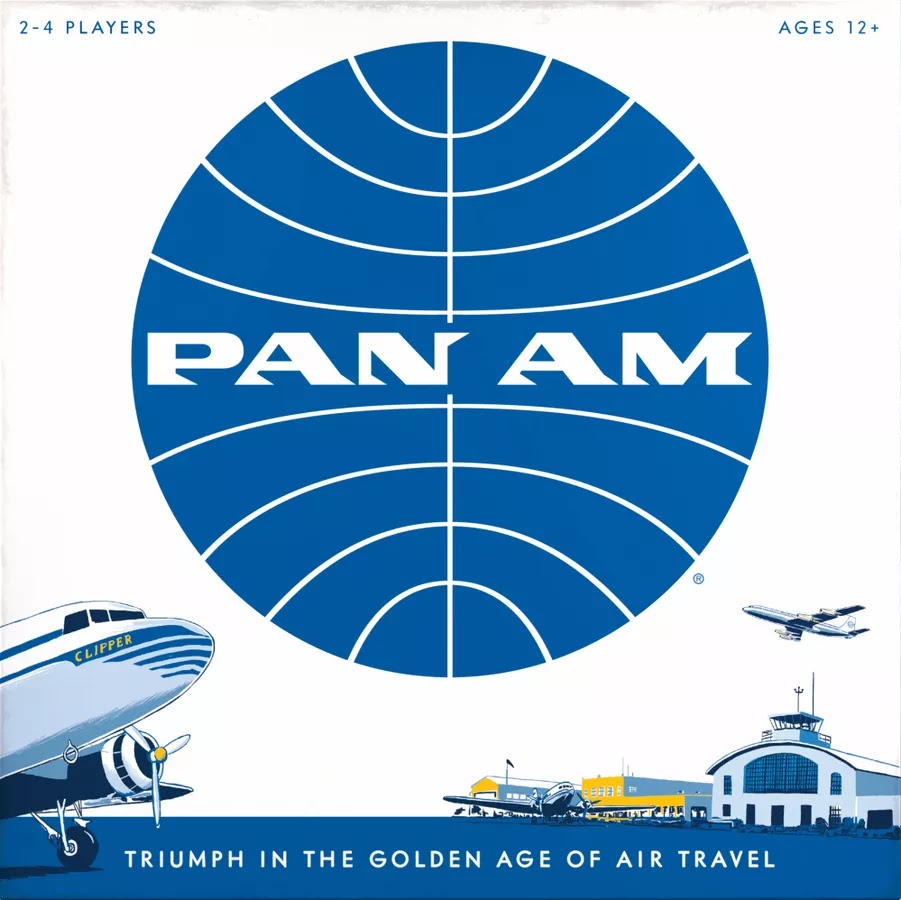
I was initially attracted to this game due to the elegant, retro graphic design. As I shop for new games, I am finding that I have less and less interest in the fantasy and horror titles that used to grab my attention, so a travel-themed game that doesn't involve stabbing anyone seemed like a nice change of pace. It's a very clever design, and different from a lot of "empire building" games in that rather than claiming more an more territory on the board, the goal is to anticipate the air travel routes that Pan Am will want to buy from you at the end of each round, with the winner being the one with the most Pan Am stock. Read the full review.


9. Star Trek: Away Missions (2023)

When I first looked at this game, the goofy looking miniatures were a turn off but I'm glad I reconsidered. Most "miniatures on map tiles" games involve a lot of fighting, but this one is much more about moving your characters to the right spot on the board for them to fulfill their missions, giving them advantages based on the cards you have in your hand. The different factions play very differently, with the Klingons more interested in openly attacking, for example, while the Romulans skulk about in the shadows and the Federation boldly go (or go boldly) about their business. And those miniatures really have grown on me. Read the full review.


8. Star Wars Unlimited (2024)

I've always enjoyed the collectible card game format. I like the idea of assembling the right combination of cards to win the game the way you want to win it, and there is a definite thrill to ripping open random card packs hoping for that rare card you need for your deck. Star Wars Unlimited is the sixth such Star Wars themed game since 1993, and definitely the most playable. Read the full review.


7. Ark Nova (2021)

Ark Nova is a bit of a rarity: a game about animals that doesn't feature any cute wooden meeples or other figurines. The game's somewhat dry appearance hides an absolutely fascinating game that combines card drafting, worker placement, and even tile laying. I always get a sense of accomplishment when the game is over, even if I didn't win. Read the full review.


6. Tiny Epic Dinosaurs (2020)

As I struggle to find room for all our games, I find the Tiny Epic line more and more appealing. And honestly, a tiny box was the only way I was going to be able to justify a third dinosaur zoo game in our collection after DinoGenics and Dinosaur Island, both of which are major space hogs. It's a delightful little game about breeding and selling different types of dinosaurs, sort of a prequel to the larger zoo games that don't stress too much about where the dinosaurs are coming from. As with most of the other Tiny Epic games, this one does a lot with as little as possible, managing to be a full featured worker placement/resource management game in a very small package. Read the full review.


5. Oltréé (2021)

I bought this board game (apparently based on a French-language roleplaying game) entirely on a whim. I was enticed by the gorgeous Vincent Dutrait cover artwork, and also by the promise of an adventure board game that might be a little smoother than Talisman and/or less fiddly than Arkham Horror, and I wasn't disappointed. Oltréé doesn't necessarily do anything new with this type of game, but it does it very, very well. Read the full review.


4. Starship Captains (2022)

Starship Captains does Star Trek better than most licensed Star Trek games do. At its best, Star Trek should be about problem solving rather than fighting, and I'm always disappointed when a Star Trek game is too combat-centric, as many of them tend to be. Starship Captains has players assigning and managing their crew in an ingenious variation on the worker placement mechanism, and juggling ship upgrades in a way that would do Montgomery Scott (or Geordi LaForge) proud. Read the full review.


3. Dune: Imperium (2020)

Combining different game mechanisms has become a popular way to design games, and this one mixes two of my favorites: deck building and worker placement. Most deck building games start each player with a small deck of cards representing basic resources, with the point being to spend those resources to get better cards, and eventually build up an engine of cards that can do whatever it is that needs to be done to win the game. Dune: Imperium takes that idea and adds worker placement, with cards dictating where workers can be placed, and a simple battle mechanism that functions as an additional resource to be spent. It's an elegant combination of elements, and it fits the Dune source material perfectly. Read the full review.


2. Lost Ruins of Arnak (2020)

Like Dune: Imperium, Lost Ruins of Arnak combines deck building with worker placement, but manages to do it in a completely different way. Arnak has players gaining cards from two different decks, one of tools and items and the other representing archaeological artifacts. As the game progresses, the amount of available tools decreases, increasing the amount of artifacts that players can add to their card decks. Cards are played to gain resources, which are then used to move around the board exploring lost temples, with the eventual goal of moving counters along a track that gives out even more resources, and also eventually leads to victory. It's an amazing game with a lot going on. Read the full review.


1. Star Wars: Shatterpoint (2023)

This was another one I wasn't going to get into because I didn't like the miniatures. Specifically, I didn't like the size of the miniatures, which are a bit larger than the standard 28mm size used for most wargames and roleplaying games. I don't know why we miniatures gamers are so obsessed with being able to mix and match our figures -- it's something we rarely if ever do, it seems that we just want to always have the option. Anyway, the miniatures for Shatterpoint are actually amazingly well done, and the larger size makes them a little easier to paint. Its an important detail considering that the average miniatures gamer is going to spend a lot more time assembling and painting their miniatures than they are actually playing.

But the game itself is fantastic too. It seems to specifically address a lot of the pitfalls common to other games of this time, avoiding stale game play by emphasizing movement and area control over just eliminating the opponent's figures as quickly as possible. In Shatterpoint it's rare that any figures ever leave the board -- the point of the game is to occupy areas of the board, and the tactical challenge is to be able to adapt when those areas move. It's a great game that really feels like Star Wars. Read the full review.


Honorable Mention

Blade Runner: the Roleplaying Game

I'm never sure whether I should lump roleplaying games in with board and card games because the experience is so different, although that is changing with hybrid storytelling games like Detective and even some miniatures games like Core Space or Conan. Blade Runner doesn't use a board or miniatures, but it does include a whole slew of prop photos, brochures, and even a newspaper, physical components that aren't common in a lot of RPGs but were absolutely essential to this one. Read the full review.


So there you have it, my favorite games from the past five years, at least for now. Ask me again in six months and it might be a completely different list...