Showing posts with label adventure game. Show all posts

Tuesday, January 28, 2025

Marvel D.A.G.G.E.R. and the importance of perceived value

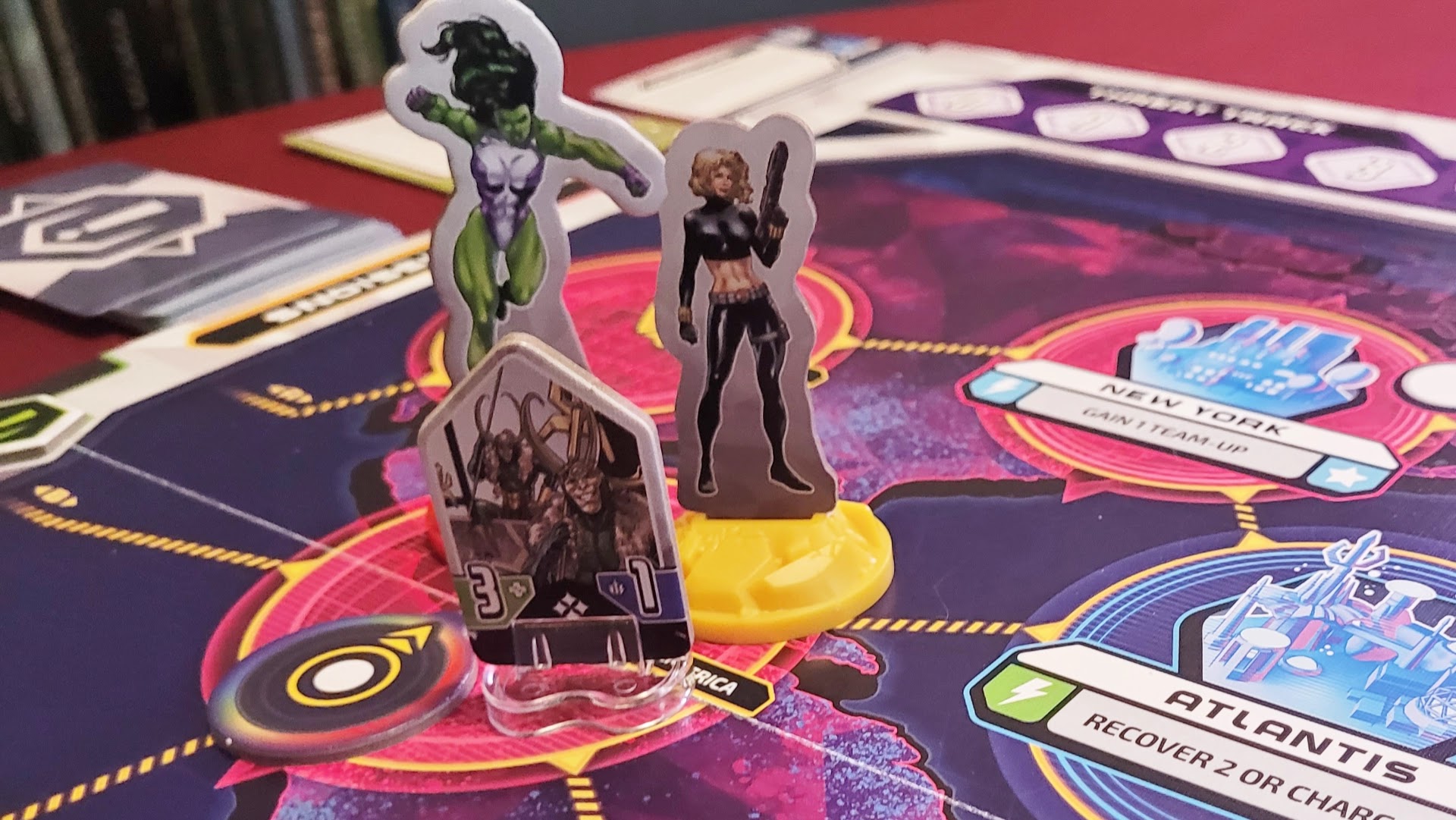
Marvel D.A.G.G.E.R., a cooperative board game in the same vein as Arkham Horror or Pandemic, was released by Fantasy Flight Games in 2023, with very little fanfare. There wasn't much marketing for it that I can recall -- the first time I remember seeing it was in a local store, and while the game looked interesting, I balked at the $90 price tag, which (if the prevailing discussion on BoardGameGeek upon its release is any indication) is what many potential buyers did. I eventually picked up a used copy for a much more reasonable price.

The game itself is quite engaging. It does indeed play a lot like Pandemic or Arkham Horror/Eldritch Horror -- players take on the roles of Marvel superheroes attempting to stop one of four powerful supervillains from destroying important locations such as New York City, Wakanda, and Atlantis. Each villain has its own particular way of spreading their minions across the board, giving the heroes foes to fight and tasks to perform in a race against time.

Over the course of the game, the players will have three villain-specific missions to solve. These usually involve moving to a specific location and passing a dice-rolling test, or doing a particular action a set number of times. Each hero also has their own side mission, which will reward them with an in-game bonus if they complete it, and the game will deal out more general side missions such as defeating less powerful supervillains. Meanwhile, at the end of each turn a threat tracker counts down based on how many locations have been destroyed, and how many villains are in play -- this tracker acts as a timer, giving the players a limited number of turns to complete each mission.

Once all the main missions have finished (pass or fail), the heroes enter into a final showdown with the villain, which plays out differently depending on who you're fighting.

There are 20 different heroes to chose from...sort of. The game leans into the legacy aspect of many of Marvel's characters, where a new personality will take over a well-known identity like Captain America or Spider-Man. Each hero card is double-sided, featuring a different version of the hero (or a similar hero) on each side: Sam Wilson or Steve Rogers, Iron Man or War Machine, Hulk or She-Hulk, and so on. You choose which one to start with, but if you character is incapacitated during the game (which happens often), you flip the card over as the other version of the character steps in to take over.

In addition to heroic identities, each player begins with one of six aspect cards. These are descriptors such as Protection, Vigilance, or Justice that put a different spin on the game's four basic actions. It adds a lot of interesting variety to the game and should substantially increase replayability, as players will be able to try out all the different hero/aspect combinations.

Thematically it's very similar to the Marvel Champions card game, carrying over the hero/aspect idea as well as the structure of heroes acting cooperatively to defeat a game-controlled villain. But Marvel Champions tends to emphasize the individual players acting based on the strengths and weaknesses of their deck, while Marvel D.A.G.G.E.R. requires a much more Pandemic-like, teamwork driven approach.

It doesn't quite have Arkham Horror or Eldritch Horror's depth of story, but that's not really a problem. Most players will be familiar with the back stories of the Marvel heroes and villains in the game, and if they're not, the game includes a handy booklet detailing each character's biography. One of my biggest problems with Eldritch Horror was the breakneck pace of the game -- I never felt like I had time to just explore the world and its storylines. With Marvel D.A.G.G.E.R. I already know the characters, so I'm happy to focus on being in the moment and defeating the villain. The sense of urgency is fun rather than stressful.

So what went wrong with Marvel D.A.G.G.E.R.? While it is still in print and available from the publisher, the consensus seems to be that it is a failed product and not likely to receive any further support in the form of expansions or promotion. Well, as mentioned before, the first problem is the price. Board games have gotten steadily more expensive over the years since, say, Arkham Horror second edition or the original Pandemic came out. Some of that is just general inflation, and a lot of it is being blamed on post-pandemic supply chain issues, specifically drastic increases in printing and especially shipping costs.

The game has a generous amount of content, with hundreds of full-color cards and counters, but it does feature cardboard standees in place of the plastic miniatures that have become fairly standard issue for this type of game. Although the truth is likely a lot more complicated, there is a perception that cardboard is less expensive than plastic, and therefore a game featuring standees instead of miniatures should cost less. In reality, the vast bulk of a game's cost is (or at least, should be) down to its design and development.

I think it's possible that a lot of the game-buying public has grown accustomed to Kickstarter games that tend to be lavish productions but also labors of love from small companies or individual designers -- the asking price of these games covers their production costs but not necessarily the hourly labor that went into creating the game's ideas and mechanisms. Put another way, when people are assessing the value of a game, they're often only looking at the relative amounts of cardboard and plastic. In any case, Marvel D.A.G.G.E.R.'s asking price was just more than the market would bear.

Cloak & Dagger by Rick Leonardi. © Marvel.

The other problem with Marvel D.A.G.G.E.R. is the title -- it's terrible. It doesn't give you any idea of what the game is about. While the game's logo explains that D.A.G.G.E.R. stands for "Defense Alliance for Global and Galactic Emergency Response," it seems like they could have come up with something less clinical and more exciting. Besides, Marvel's Dagger isn't even in the game...

Rating: 4 (out of 5) If you've ever thought that Pandemic or Arkham Horror would be more fun with Marvel superheroes, this game is probably a good bet for you, and a lot of online retailers have it for a much more reasonable $50 or less.

Wednesday, August 14, 2024

Dive into yet another corner of the Star Wars universe with The Mandalorian Adventures

I never seem to get tired of "moving guys around on a map" games. One of the oldest games in my collection is Leading Edge's 1989 AliensUnmatched and Core Space are among my current favorites, and that's not even getting into "proper" miniatures games with three dimensional terrain like Star Wars: Shatterpoint or Gangs of Rome.

The Mandalorian Adventures is definitely on the light end of games of this type. It's a cooperative game that asks players to take on the roles of characters from the Disney+ series and work together to complete missions based on episodes from the first season of the show. The game makes use of a spiral-bound book, with each two-page spread consisting of a map and its game objectives plus any special rules needed. The missions tend to be fairly simple variations on finding a particular item from among several face-down tokens and then escaping off the edge of the map.

The game uses cardboard standees rather than plastic miniatures, presumably to keep the production costs down. Even as a dedicated miniature painter I didn't mind this at all -- the artwork on the standees matches the other game artwork, and it meant I could get playing without having to take extra time for painting.

Each character uses a unique deck of cards to perform actions in the game, with the number on the card determining how effective the action is. For example, play a four for movement and your character moves four spaces; play it for attack, your target takes four damage. Some of the cards also include special game text that is resolved if that card is used for a particular action -- this is what makes the different characters distinct from each other, with some relying on stealth, and others on greater mobility or simple brute force.

Enemies are represented by tokens on the board, each with a type (either a melee fighter, a shooter, or a sniper), a number of wounds required to eliminate them, and a special ability that resolves when a player character moves near them.

One of the game's more ingenious innovations is the game mechanic for activating the enemies. Each time a player uses a card to perform an action, that card goes in a pile that is specific to that action. Once the numbers on the cards in a particular stack add up to 5, a card is drawn that will cause a particular type of enemy to either move towards or attack the closest player character. If the total adds up to 6 or more, it also triggers a "crisis" event that is specific to the scenario being played, usually something  that will make things more difficult for the players. This forces the players to consider their actions each turn carefully: they'll need to try to spread out their actions as much as possible among the different choices, and also to consider when to play a particular action. Normally, game-controlled enemy actions are fairly arbitrary in cooperative games like this, but here the players can mitigate that with their choices. It makes the game a lot more interesting.

As "hobby" board games attempt to reach a wider market, designers are faced with the reality that their games might be a bit much for people whose only previous experience is with family games like the dreaded Monopoly. Many designers have chosen to address this issue by instructing players to start out with a series of tutorial games that dole out the game's concepts and mechanisms gradually. Normally I don't care for this sort of thing (although I do recognize its value), but The Mandalorian Adventures implements the idea well. The game includes a deck of cards in a fixed order that are meant to be worked through over the course of the first six games. Whether the players win or lose, after each game they are introduced to new content that will make the game a little more complex and improve its replayability.

Rating: 4 (out of 5) A very fun little game that should be accessible to a much wider audience than something like Shatterpoint or even Firefly Adventures.


Monday, March 25, 2024

Star Trek Away Missions: Is it a board game with miniatures or a miniatures game with a board?

First, let’s talk about the miniatures

When the game was first announced, Star Trek: Away Missions came under a bit of criticism over the cartoony style of the miniatures, and I must admit that I initially decided to pass on the game for that reason. Miniatures gamers tend to obsess over scale, with a weird need for all of the miniatures in our collections to be interchangeable or at least consistent – it’s a fairly unreasonable demand that I suspect comes from the same part of the brain that compels some people to collect Funko Pops or Lego minifigures.

However, I was given a chance to take a closer look at the game, first via an OnTableTop.com Let’s Play and later from an open box that the owner of my local game cafe kindly let me paw through. I determined that the game play looked pretty interesting, and the figures were growing on me. The fact that the game definitely plays much more like a board game than a tactical miniatures game (although it has plenty of elements of both, which we’ll get to shortly) helped me to stop comparing the figures to “proper” miniatures, and as it turns out, they have been an absolute joy to paint – you can see some of my efforts on my OnTableTop project blog.

Now let’s talk about the game

There is an emerging category of game that draws heavily on the elements of both miniatures and board games to produce something that is (hopefully) more tactical than your typical board game, but less complicated and labor-intensive than your typical miniatures game. The idea is nothing new, going back at least as far as HeroQuest and Aliens (both published in 1989). Games of this type tend to occupy a sliding scale with “board game with miniatures as playing pieces” at one end and “miniatures with a pre-printed board” at the other, with notable examples including Monolith’s Conan and Mythic Battles, Gale Force Nine’s Firefly Adventures and Aliens: Another Glorious Day in the Corps, and Osprey’s Wildlands and Judge Dredd: Helter Skelter. Star Trek: Away Missions definitely leans towards the board game side of this spectrum, but it does have some tactical elements to it.

The game takes place immediately after the Battle of Wolf 359, the Borg attack on the Federation seen in the Star Trek: the Next Generation fourth season episode “The Best of Both Worlds, Part 2.” The premise of the game is that the players are directing crews to investigate and salvage damaged Federation and Borg vessels in the aftermath of the battle. The board is made up of tiles depicting the interior of a Federation ship on one side and a Borg ship on the other – they are functionally the same but it does allow for some variety between games, as certain goals will be in different places depending on which side players decide to use.

Once the board is set up, the players each begin the game with a crew of four or five characters, and two separate decks of cards, one for missions and one for support cards. The mission cards describe requirements that usually involve moving a character with a particular skill to a specific area of the board and then passing a test by rolling dice. Combat may occasionally break out (also resolved using dice), but for the most part it is a mission solving game, which is in keeping with Star Trek’s themes and ideas of non-violent solutions to problems – the best Star Trek stories are about the heroes cleverly avoiding war and combat, and it’s nice to see that reflected in the game.

The game is played over three rounds, during which players move their characters around the board in an attempt to fulfill the requirements of their mission cards. Support cards can be played to help things along, make it an interesting mix of tactical movement and “right place, right time” card play. Three rounds doesn’t seem like a lot, but in practice it’s plenty of time for a satisfying game, and makes for a nice time limit to keep the game from dragging on for too long.

The characters in the base game, as well as those in the six expansion packs that have been released so far, are all organized into pre-made teams with only a very minor amount of customization available. The game attempts to make up for this by making the mission and support card decks customizable. The idea is that after you play a few games you can pick and choose which missions you want to try to attempt with each crew, and which support cards you think will be of the most use. It’s a concept that should be very familiar to players of trading card games such as Magic: the Gathering, but I think it’s one of this game’s few weak links. It requires players to spend time choosing cards before the game even starts – something that is expected in customizable games but seems a little out of place in what is being presented as more of a traditional board game.

All in all, Star Trek: Away Missions is a nice mix of board game and tactical miniatures game, leaning into the strengths of each type of game. And you will end up finding those goofy looking miniatures charming, I promise...

Rating: 4 (out of 5) With its emphasis on mission solving elements rather than combat, this really does seem like the best choice for a Star Trek miniatures game.

Thursday, February 2, 2023

PARKS: the magical quest game

PARKS (I don't know why the title is always in all caps, it just is) stands out in the overall world of hobby gaming for two reasons: its high end graphic design, and its theme, which avoids the usual wizards, goblins and Marvel superheroes who still seem to have a stranglehold on the industry. I don't want to say it's a game for adults, but it's definitely a game that should appeal to those who might be a little turned off by the more juvenile trappings of the gaming hobby.

The game is about hiking through the national parks of the United States. Each player has two pawns which move along a path, with spaces representing different types of terrain such as forests, or lakes, collecting resources that are spent in various combinations in order to pick up cards representing different national parks, with stunning artwork from the Fifty Nine Parks print series. Along the way, players acquire equipment such as trail guides and water bottles that make collecting cards easier, and take photos for extra points. after four "seasons" of play, the player with the most points worth of parks cards and photos wins the game.

As I mentioned earlier, the sedate theme, amazing illustration and design, and high quality components make the game stand out from the pack, but in terms of game design, it still has its roots in "quest" style adventure games like Talisman, which in turn call back to "move around and pick up stuff" classics like Monopoly or Clue. You're still moving around a board collecting treasure, which you then use to make the game play easier, with the ultimate goal of earning points to win. The only real difference is that in PARKS, your thematic goal is to take a nice hike and see some amazing scenery, rather than defeat the dragon king or whatever. It's a tried and true game concept, the innovation is in making it appeal to a new audience. And the amazing artwork builds a world just as compelling as middle-earth or the Marvel universe, with the added bonus that the world it describes is real.

As I understand it, this game is widely available in national park gift shops and the like, and the publisher has done a good job of getting it into mainstream venues like Barnes & Noble and Target, which is great for the hobby -- it brings in new players rather than competing for the existing ones with more of the same.

Rating: 5 (out of 5) While it's not necessarily a game of subtle complexities, it is a gorgeously designed game with an extremely solid, dependable structure.

Tuesday, January 10, 2023

Oltréé: the sweet spot

There is a sweet spot with cooperative games. Once you've removed competition with the other players, the challenge comes in successfully ganging up on the game itself. If the game is too easy there's no challenge, but if it's too hard it can be frustrating -- no one likes to lose all the time. Of course, difficulty is subjective, but the best cooperative games occupy that narrow Goldilocks "just right" zone.

Oltréé is just such a game. It's a fantasy adventure game co-designed by Antoine Bauza (creator of Tokaido and rapidly becoming one of my favorite game designers), based on a French roleplaying game first published in 2013. Players take on the roles of rangers charged with reclaiming the land after a devastating war, with tasks including rebuilding a central fortress and wandering the nearby countryside investigating strange incidents and assisting the local inhabitants. At the same time, the events of a predetermined scenario play out, giving the players additional tasks to perform and also acting as a built-in timer for the game.

At the start of the game, the players each choose a unique Ranger character to play, and are then given an Assignment which gives them a series of tasks to perform and determines the particular mix of Incident cards that will come into play throughout the game, offering further challenges and rewards.

Central to the game is the Adversity marker. At the start of each player's turn, they roll a die to see how far the marker moves along it's circular track. The space it lands on determines what new challenge awaits -- it can be an Incident that needs to be investigated, a Problem that needs to be solved, an Event that has a global effect, or the next chapter in the Chronicle, the ongoing story that plays out over the course of the game. 

The game then becomes a study in crisis management, similar to Arkham Horror or Pandemic but without quite so much stress and panic. Players need to move around the board, managing the number of Incidents and Problems in play -- too many unresolved incidents will result in a loss of Prestige, which loses the game for the players if it drops to zero. Problem cards limit the resources available to the players, which are needed to add buildings and fortifications to the fortress, which in turn make solving Incidents easier.

All the while, the players' efforts are occasionally interrupted by events from the Chronicle, which usually require tasks such as a dice test or the construction of a particular building. The Chronicle builds to an eventual conclusion in the form of an especially difficult dice test, made easier depending on the amount of progress that has been made on the original Assignment card. It is the interaction between different combinations of Assignments and Chronicles that should lead to a level of replayability that story-driven games like this usually don't have.

Rating: 5 (out of 5) With its simple but elegant components (including some gorgeous illustrations by Vincent Dutrait), intuitive game play, and compelling stories, Oltréé is a joy to play.

Tuesday, April 7, 2020

You, too, can make the Kessel Run in less than 12 parsecs in Star Wars: Outer Rim

Star Wars: Outer Rim turned out to be our most played game of 2019, which took us completely by surprise because it didn't even come out until October of last year, and we hadn't really been planning on getting it at all. A friend bought it and brought it over for us to try, and we were instantly hooked, buying our own copy a few days later.

Not only did we play it 11 times in less than three months, but we've found that it's a big hit among most of our gaming friends. The Star Wars theme is a pretty easy sell, but on top of that it's a really engaging and accessible game, without the direct confrontation in most Star Wars games like X-Wing or Rebellion.

Each player chooses a ship captain to play as, with choices ranging from well-known stalwarts like Han Solo or Boba Fett to more obscure characters like Dr. Aphra from the comic books or Ketsu Onyo from the Star Wars Rebels animated television show. The time frame that the game takes place in is intentionally vague, but is roughly between the prequel trilogy and the originals, a little after the time of Solo: A Star Wars Story.

Characters start with a choice of generic ship and a starting mission or bounty, and the goal from there is to achieve fame points by travelling between planets, delivering cargo, catching bounties, and eventually upgrading to a better ship. Each character also has a unique personal goal they can try to complete to gain extra points and unlock additional special abilities.

What's great about the game is how open-ended it is. Players have numerous options when visiting a planet and can do anything from hiring contacts to having random encounters after they've delivered their cargo, turned in their bounty, or completed whatever errand they've been hired to run. Success or failure is determined by a simple dice roll system, with rolls modified by the various skills and abilities of the player's captain and crew.

It's a "pick up and deliver" game similar to Firefly or Wasteland Express Delivery Service, but where Firefly strains under the weight of its expansions, Outer Rim gives a similarly epic play experience in half the time and taking up a fraction of the table space.

Rating: 5 (out of 5) A terrific adventure game that avoids the epic good vs. evil battles of Star Wars in favor of exploring its rich, textured setting.

Thursday, December 26, 2019

Toy soldiers, part 3: Core Space

When I was a kid Star Wars toys were all the rage. One thing that the developers of the original Star Wars action figures back in the 1970s got absolutely right was that the space ships, vehicles and especially the environments were at least as important as the characters, so they scaled their toy line in such a way that they could include play sets representing locations from the films for kids (and adults) to place the characters in.

Environment is at the heart of Core Space, a game developed by the makers of the Battle Systems line of cardboard miniatures terrain. Their sci-fi series, representing space station corridors, futuristic cities, and planetary outposts, was their most recent (and most successful) product to date, so naturally when they decided to create a game to go with their terrain, it was going to have a space opera theme.

While they could have gone with a standard skirmish game, they opted instead for something with a lot more narrative and adventure to it. Players control crews of scoundrels and pirates in what is essentially a sci-fi dungeon crawl, creeping around in labyrinthine space stations searching for cash and equipment (and yes, the loot is even stored in futuristic treasure chests). While players can opt to attack each others' crews, that would take precious time away from searching for goods and interacting with non-player civilians who might provide useful information or even be persuaded to join the crew.
If it sounds too easy, there's the inevitable catch: the galaxy the game takes place in is under attack from an enigmatic race of killer robots, and a few turns into the game those robots start appearing on the board, their actions controlled by a simple but very effective AI that governs where they move and who they attack. As the game progresses, more advanced (and deadly) models start appearing, and the tension ramps up. The game turns into a "press your luck" situation where you know you should be moving all your crew back to the airlock, but wait, there's a cargo crate we didn't look in yet...

The rules are simple and cinematic, using proprietary dice and an easy measuring system for combat, and there are lots of options for non-combat actions like interacting with civilians, opening and closing doors, using computers and even breaking and jumping through windows. And the fact that the game is designed specifically for the Battle Systems terrain means it gets the most out of it.

The game really shines when played in a series of linked missions over several games, using an experience system that allows crew members to improve their abilities and equipment over the course of the campaign. It even allows for improvements to the crew's space ship, allowing it to do things like scan the station for information or even defend the airlock from off-screen.

Rating: 5 (out of 5) a well designed game with rich, familiar-yet-different characters and a setting that can't help but be fully immersive thanks to the ingenious terrain.

Monday, November 11, 2019

Marvel Strike Teams: a superhero dungeon crawl


On first glance, Marvel Strike Teams looks like another variant in Wizkids' Heroclix line of games. It has many similarities, both thematic and mechanical, but a number of differences that make it an interesting game in its own right.

Like Heroclix, Marvel Strike Teams is a tactical superhero battle game. It uses a grid system for movement and range, and characters find their powers and abilities decreasing in effectiveness as they take on damage, which is a hallmark of the Heroclix system.

Unlike Heroclix, Strike Teams is a one vs. many style game, with one player taking on the role of a supervillain and his minions, and the others each controlling a single hero and working cooperatively to foil the villain's dastardly plans. It's also much more mission oriented, with victory centered on accomplishing certain in-game goals (such as rescuing hostages or finding macguffins rather than just trying to obliterate your opponent's forces. In spite of the superhero theme, the game structure is that of a classic "dungeon crawl," with heroes creeping through rooms and corridors in search of treasure and a quick exit.


The game is designed to be played campaign style over multiple game sessions, with both the heroes and the villains gaining experience and improving their abilities between games, another thing that sets it apart from the one-off battles of Heroclix and makes it seem more like a D&D-style dungeon crawler.

But the really innovative thing about Strike Teams is that it uses a diceless system for combat. Players instead use resource management and damage control to accomplish their side's goals during the game.

Each round, characters are given a certain number of action points, which can be spent to move, heal damage, use special powers, and most importantly, attack and defend. Action points can be saved up from round to round (up to a pre-set maximum), so game play is a balancing act between moving, attacking, and saving aside points to defend your character against attacks.

It's very different from most battle games (including Heroclix), which use random dice rolls to determine the outcome of combat. Sure, most of those games will include game mechanics to mitigate the randomness such as rerolls, bonuses, and extra dice, but there is always the chance that an attack will go badly due to random chance that is outside the player's control.

Monolith's Conan game is probably a closer comparison in terms of the level of strategic resource management and focus on scenario goals over outright fighting, but even it uses dice to resolve combat.

With only a handful of characters to choose from in the base game an one small expansion, Strike Teams lacks the epic scope of what Heroclix can offer with its thousands of different figures over multiple franchises. It's a pity there aren't more expansions planned for Strike Teams, because mechanically it's a much more interesting game.

Rating: 4 (out of 5) A terrific alternative to battle games like Heroclix, but unfortunately its lack of commercial success will limit this game to only a handful of characters and limited replayability.

Tuesday, October 1, 2019

Going your own route with Western Legends

“Leave me alone and let me go to hell by my own route.” 
– "Calamity" Jane Cannary, shortly before her death in Deadwood, South Dakota, in 1903. 
I love open world adventure games like Runebound, Fortune and Glory, and the mother of them all, Talisman. I also love the historical western genre, and have often found myself wishing, "if only there were a wild west version of Talisman..."

Well, now there is. Western Legends took Kickstarter by storm last year, billing itself as a wild west sandbox board game, and for the most part it delivers on that promise.

Players take on the roles of legendary historical figures such as Doc Holliday, Calamity Jane, Billy the Kid, or even lesser known characters like Bass Reeves or Y. B. Rowdy (this game does a better job than most at equal representation, with nearly half of the playable characters being women or people of color). The object of the game is to roam the countryside earning "Legendary Points" towards a goal determined by the length of game the players decide on at the start.

Players can earn points by prospecting for gold or herding cattle, but the real meat of the game is in the decision to either follow a path of law and order as a Marshal, or become a Wanted outlaw. Marshals spend the game tracking down non-player bandits as well as players who have gone renegade, facing off in combat via a clever poker-based game mechanic. Outlaws can choose to rob the bank, steal cattle, but have to watch out for player Marshals as well as a non-player Sheriff, because getting caught will force them to pay a hefty fine and set them back to the start of the outlaw track. Players can even switch careers midway through the game -- you aren't locked into a single course of action and can switch gears as needed.

The problem with a lot of open world games is that it's often difficult for players to figure out what they should be doing. Western Legends deals with this through several goal-oriented game mechanics. First of all, each player character comes with a set of goal cards outlining fairly simple tasks to perform such as winning fights or rustling cattle. There is also a story deck, which rewards players who achieve certain goals with bonus points or equipment as well as a bit of back story.

If I have any problem with Western Legends it's that it doesn't really shine at lower player counts. Playing the game with two requires the use of a third character, the Man in Black, whose actions are determined by a random set of cards. It works, but the game is a lot more fun with a full table of 4-5 players so Marshals have plenty of outlaws to chase, and outlaws have plenty of other outlaws to distract the Marshal...

Rating: 5 (out of 5) a terrific game that does exactly what it set out to do, which is to provide open-ended board game adventures in the wild west.

Monday, September 23, 2019

Running and screaming with Jurassic Park: Danger

"Oh, yeah. Oooh, ahhh, that's how it always starts. Then later there's running and screaming."
-- Ian Malcolm (Jeff Goldblum), The Lost World: Jurassic Park
In the past few years there have been several great games such as Dinosaur Island and DinoGenics that were clearly inspired by the Jurassic Park franchise. Interestingly, those games are about building a successful, functioning dinosaur zoo, the one thing that doesn't happen in any of the films; they're always about the dinosaurs escaping and causing chaos. I guess it takes a legitimately licensed game like Jurassic Park Danger! to really understand what the franchise is all about.

It's a one vs. many game based on the first film in the series, where one player takes control of the escaped carnivorous dinosaurs while the others play as a selection of the humans trying to make their way through the malfunctioning park to the helicopter pad and escape.

Each human character has a unique deck of cards giving that player general options such as moving and hiding as well as a few that are specific to each character, such as Ray Arnold's "hold on to your butts" that allows him to turn the electric fences back on, or little Timmy's encyclopedic knowledge of dinosaur behavior. Human players have to carefully manage their cards, choosing the best moments to play certain cards; if a human player ever runs out of cards, their character is eliminated and removed from the game (but not to fear, that player gets a new character to play).

In addition to avoiding the wily dinosaurs, the human characters each have a goal they must accomplish before they can head for the helicopter pad. Most of them just have to go to a specific location to collect their goal token, but some have to perform a specific task: Muldoon the game warden has to distract the Velociraptor, for example. Sneaky Dennis Nedry starts play with his goal token already collected, so all he has to do is make a beeline for the chopper, but he's more likely to be attacked by a dinosaur than the other characters.

The dinosaur player's goal is simple: eat a certain number of humans before they can escape. The dinosaurs move via a deck of cards similar to what the humans have, and each dinosaur has a special ability that they can't use every turn, so their player has to employ some strategy to get the most out of each dinosaur.

With cardboard components and wooden meeples instead of sculpted miniatures, Jurassic Park Danger! has clearly been designed for mass market sale. In an industry that seems increasingly interested in marketing expensive, overproduced, made-to-order games for a small market of mail order consumers (a trend I'm as guilty of supporting as anyone), it's nice to see a cheap, accessible game that's a lot more interesting than we usually see in licensed mass market products.

It's not going to change your life or anything, but it's fun and simple and evokes the source material very well. This might be a good entry level game for younger gamers, people new to the hobby, or even for your regular gaming group if they need a break from Gloomhaven...

Rating: 3 (out of 5) not quite in the same league as most hobby board games, but close, and definitely worth the low price.

Monday, January 28, 2019

Firefly Adventures: Brigands and Browncoats -- just act casual


2018 was the year of the skirmish game for us. We spent a lot of time playing 7TV, Doctor Who: Exterminate, and Mythic Battles: Pantheon, and even more time painting miniatures and building terrain for them. On the surface, Firefly Adventures: Brigands and Browncoats looks like another boxed skirmish game, but it really isn't -- at least, not entirely.

Like Firefly: the Game and Doctor Who: Time of the Daleks, Firefly Adventures shows that Gale Force 9 are masters at building engaging games around licensed properties, rather than simply slapping a licensed theme on an otherwise generic game design, and that they have a deep understanding and respect for the material the game is based on.

It's a cooperative game where every player plays a character from the Serenity crew, which should immediately appeal to fans of the television show. The game controls the bad guys using a simple but elegant AI that dictates what they do based on criteria such as where the closest player character is, or in some cases a pre-determined patrol route. This is interesting, but it is the game's two core concepts that really set it apart from other games of this type, and also makes playing it feel like an episode of the show.

The first of these is the idea that player characters switch back and forth between acting casual or acting heroic at various points in the game, sometimes by choice and sometimes not. A casual character can move freely about the board without attracting the attention of the bad guys, making it easier to sneak into buildings and even talk to the non-player characters. However, many actions such as attacking or breaking down doors require characters to act heroic, which attracts the attention of the bad guys, causing them to move and attack any heroic characters they can see. Each state is represented by a separate miniature, one in a casual pose and the other in a more action-packed one.


The other game mechanic that makes this game more interesting and thematic is the turn structure. Rather than just moving in turn, characters' movements are dictated by a time-based system, with different actions taking up specific amounts of time (called "moments" in the game). Each character has a counter that is moved along a track based on what actions they take, and the character at the back always takes the next turn. This is where the strategy and decision making gets really interesting, as you have to weigh the actions you want to take against how far along the time track you will move, and what characters will act before you get another turn.

The game also has a card and dice-based system to govern both breaking into buildings and talking to non-player characters. You draw a card on each attempt that gives you two choices of possible actions to take, some of which might be easier but force you to act heroic and attract the attention of the bad guys.

Game play is scenario driven, with different board setups and win conditions, which really makes it feel more like a role playing game with no game master than a tactical skirmish game. Tactics usually involve sneaking around trying to avoid a fight rather than all-out combat, and the goal is usually to escape the board with an objective instead of just defeating all opponents. There's even a campaign mode where you try to collect as much money and equipment as possible over several games.

One other thing I have to mention is the game's ingenious terrain, a series of small pre-built boxes designed to look like the converted shipping crates that make up so much of the background of the television show. The game box bottom itself is printed to look like a larger building. It's a clever way to introduce 3-D terrain, and also important for a game where staying out of the bad guys' line of sight is often the best strategy.

The only real complaint I have is that the rule book is poorly organized, making looking up rules somewhat difficult during play. As skirmish games go it's fairly simple, but there are always going to be times when you need to refer to the rules.

Rating: 4 (out of 5) A fun, innovative game that feels much more cinematic than most "move and shoot" games, only marred by a poorly organized rule book.

Wednesday, January 9, 2019

You can't win them all: Planet of the Apes

I like cooperative games, I love adventure games, and I'm a huge fan of the Planet of the Apes, movies, so this game should have been a shoe-in for me. Unfortunately, despite some really nice production value and a very well-considered application of theme, this game just isn't very interesting to play.

The game plays like a combination of Reiner Knizia's Lord of the Rings board game with some Yahtzee thrown in. Players are confronted with of a row of cards based on the prominent events of the film, each requiring a particular combination of dice rolls in order to pass. A player's turn involves rolling dice in the hopes of getting the right combination, with a bit of card play to change dice facings. Success moves the marker representing Charlton Heston's Taylor along a path which serves as a timer, with an ape marker moving along the same path. If the ape makes it to the end before Taylor does, the players lose.

It's a simple enough game, but it relies on a lot of luck to get the dice rolls and the have the cards you need to progress, so it can be frustrating when you lose on what amounts to a bad roll or draw. In the end, this game is really just about rolling dice, with very little in the way of meaningful or interesting decisions to make.

The Planet of the Apes theme is nicely applied, with the cards calling back to iconic scenes from the film, and the idea of having players take on different aspects of Taylor's psyche rather than separate characters is an interesting solution to the problem of the story really only having one main character.

It's really too bad the game isn't better.

Rating: 2 (out of 5) The great use of theme actually makes this otherwise dull game all the more frustrating.

What we'll play instead: Lord of the Rings: the Board Game and Elder Sign are both similar and a lot more fun. Doctor Who: Time of the Daleks is another very similar game that uses its theme well and offers more interesting and immersive game play.

Tuesday, December 11, 2018

Doctor Who: Time of the Daleks -- it's about time...


Doctor Who: Time of the Daleks is essentially a re-themed Elder Sign, but I think I'm okay with that. Thematically, Elder Sign is a game about tweedy academics solving problems intellectually rather than with brute force, and that is absolutely what a Doctor Who game should be about.

Like Elder Sign, the core gameplay in Time of the Daleks involves rolling dice and matching their symbols in order to complete tasks. Each player plays as a particular Doctor, with assistants and gadgets that allow him to manipulate the roll of the dice in order to get the right combination of symbols. Each successfully completed task moves that player closer to winning the game.

Also like Elder Sign, there is a villain at work, essentially trying to outrace the players and prevent them from winning. In this case it's the Daleks, and their presence is felt in the game in several ways. Failing at a task will generally move the Dalek saucer forward on the scoring track, and of course they win if they beat all the players to the end. Additionally, any failure will also result in a Dalek figure being placed on the board, where they reduce the number of dice the players get to roll. Too many Daleks on the board will also lose the game for the players.

There are a few ways in which Time of the Daleks differs from Elder Sign (enough to keep Reiner Knizia's lawyers at bay, anyway). The dice-rolling tasks that players must accomplish are determined by a combination of two different tiles on the board: a location and a dilemma (usually a villain from the TV series' long history). This makes for a great deal of mix-and-match variety, as Silurians may threaten the planet Karn in one game, and the Time Meddler in another.

Combine that with a randomly shuffled deck of companions, and the game can tell a multitude of what if stories as Leela teams up with Sarah Jane Smith and the 11th Doctor to stop the Cybermen from invading Clara's apartment, or the First Doctor and Nardole foil the Master's Trap at the Bank of Karabraxos.


Another way in which it differs from Elder Sign is that it is only partially co-operative. Players are in competition with each other to get to the end of the score track first, but they all lose if the Daleks get there first. If a player is having a tough time solving a dilemma, he can ask one of the other players for help, which they may be inclined to do if it will slow down the Daleks. Additionally, the assisting player shares in the reward for completing the dilemma. It reminds me a lot of the multi-Doctor stories where they fight and bicker but end up cooperating for the greater good.

If you read the online chatter about this game, the main complaint about it seems to be that the announced expansions for the game have not yet materialized, a year after the game's release. Part of this frustration no doubt comes from the fact that the game was originally intended to feature six Doctors rather than four, and was scaled back in order to get the asking price down. The game's coverage of the world of Doctor Who does feel a little thin here and there -- clearly there is room for a lot more content.

Nevertheless, it's a solidly designed game with some beautifully designed components (The Expanse Board Game could learn a lesson here). Most importantly, it feels like Doctor Who, which is something no other board game in the show's 55 year history has quite managed to do.

Rating: 4 (out of 5) A good game that could be a great one. It captures the feel of Doctor Who, but not quite the depth.
Check out my OnTableTop.com project blog about painting the miniatures that come with this game.

Monday, January 29, 2018

Grimslingers: weirder western tales


I love westerns, and as such I have a huge weakness for games in that genre, of which there are surprisingly few. While I prefer a straight-up historical western, I'm willing to settle for weird westerns with fantastical elements added, and that more-or-less describes the theme of Grimslingers.

Grimslingers is really two games in one: a fairly simple combat game about dueling sorcerers, and a much more engaging cooperative adventure game in which players work through a storyline that introduces them to the world of the game, fighting weird monsters and gaining spells and items along the way.

The dueling game is really just a combat system and not particularly interesting on its own -- the cooperative game is where Grimslingers really shines. Players start out with a hand full of basic spells and a few items, moving around on a small map to gather more powerful spells and better pieces of equipment, gain experience that allows them to play more effectively, and unfold the events of the (admittedly very linear) story.


It's still essentially a combat deck-building card game, and a somewhat clunky one at that, but it does have a few interesting innovations. Principle among them is that players don't have a randomized deck. Instead, they have a maximum hand size (which increases as they gain experience) and a "stash" that they can freely look through and take cards from at certain points during the game. Once used cards are put into either a discard pile or a deactivated pile, and can only be recovered by spending energy points, the game's main currency for playing cards.

Additional cards are earned by defeating monsters and also at certain points in the storyline, which makes it a little different from the usual "play cards to buy more cards" mechanics that most deck-building games employ.

Despite these innovations, the game play is a bit clunky. Having two different discard piles with slightly different rules governing them is needlessly fiddly, and too much of the game rides on random dice rolls or draws from a separate deck of numbered cards. In a recent game we played, we made it three quarters of the way through the game, only to be defeated by a random event card and some bad number card draws.

But all that aside, the real point of the game is as a framework to hang the setting on, and a wonderful setting it is. The world of Grimslingers is a perfectly balanced mix of western, post-apocalypse, science fiction, and fantasy, with a surprising amount of humor thrown in, and supported by some truly spectacular artwork. The game is clunky, but not so clunky that it distracts from the world it takes place in.

Rating: 4 (out of 5) Game play alone would probably be a 2, but the setting is so vibrant and original that it more than makes up for it.

Monday, October 30, 2017

Conan: Let me tell you of the days of high adventure


Conan, by French game publisher Monolith, merges board gaming, tactical miniatures and even role playing into what is probably the best adventure game I have ever played. The game uses a "one vs. many" structure similar to Mansions of Madness First Edition, Descent, and the legendary Heroquest, with one player taking the role of Overlord to control the villains and monsters, and the rest of the players working together to accomplish the goal of the particular scenario being played.

The game uses an ingenious resource management system to govern player actions. The hero players each get an individual character with a set amount of plastic gems that are spent for actions such as attack, defense, movement, opening treasure chests, and so on. This gives the players a lot to think about tactically: spend too many gems running across the grounds of the ruined fortress and you won't have enough for an effective attack, and there's a pack of vicious hyenas right around the corner, so be sure to save some gems for defense. Players are given the choice at the start of each turn whether to stay active and only recover a few spent gems, or to rest, which recovers more gems but means you don't get any actions for the turn.

Conan hero sheet with resource gems

The Overlord, in control of the forces stacked against the heroes, has a similar system of spending gems to activate the monsters and villains at his disposal. Depending on the scenario, the Overlord is given a row (called the "river") of between 4 and 8 tiles, with each tile representing a group of minions or a single (usually more powerful) individual. The cost in gems to activate a tile depends on its position in the river, and once a tile is activated, it moves to the end making it more expensive to activate. The Overlord's strategy lies in managing the river and his gems so he'll be able to move the right adversary at the right time to prevent the heroes from succeeding at whatever their goal is.

The Overlord's control panel with tiles representing his forces
The game is entirely story-based, with the particular scenario dictating the game's setup, including the heroes' equipment, the setting (the game comes with 4 different boards) and the goals for the Overlord and the heroes. There are a great variety of different scenarios to choose from, some of which put the heroes on the defensive, charged with keeping a non-player character alive or defending a position, while others put them on the attack, requiring them to rescue a princess or defeat an evil sorcerer (or often both).

The relatively simple mechanics make it an easy game to learn and teach (despite an often confusing rule book that suffered from numerous errors when translated from its original French language), and unlike the first edition of Mansions of Madness, the Overlord's game play is just as simple and fast paced as the heroes. The game does favor action and combat over story, but that just makes it true to the original Conan stories by Robert E. Howard.

Conan has had a somewhat troubled release, with a confusing and over complicated Kickstarter campaign, limited retail availability, and incomplete rules for integrating the game's large number of add-on components. But the core game design and quality of the miniatures and other components is so solid that I'm willing to forgive all that, as none of it really interferes with my ability to enjoy this fantastic game.

Rating: 5 (out of 5) a great tactical action game that puts you right into the middle of Conan's adventures.

Tuesday, September 5, 2017

Return to Madness Mansion, this time with an app: Mansions of Madness Second Edition


The first edition of Mansions of Madness is a great game. It really is a role playing game without all the extra work, however, it does have some issues. It requires one player to play as the Keeper, in charge of unfolding the plot and controlling the monsters, and that player's role is much more difficult and often less rewarding than that of the other players, who just have to bumble around in an old house until they either die, go insane, or (very rarely) solve the mystery.

Its nature as a board game requires it to have a very strict structure, where a "real" role playing game is much more free form, and one mistake during the game's complicated setup can ruin the whole experience. It's also extremely fiddly, with tons of cards and counters on the table -- a strong breeze or curious house cat could end the game in a moment.

For Mansions of Madness Second Edition, the game's designers set out to solve the game's problems by introducing a companion app to take over the Keeper's job, managing the storyline and a lot of the fiddly bits and allowing all the players to work together as investigators.

When this idea was first announced, there was a lot of resistance among players of the first edition, mainly of the "you got video game in my board game" variety, but I believe most of those fears were put to rest. While the app is a vital component of the game, it functions more like a story book, keeping track of the timed release of the game's story elements. What it doesn't do is make Mansions of Madness into a video game. Players still track the majority of the game's progress using a board, miniatures, and counters, but the app has allowed that tracking to be greatly simplified, allowing the players to concentrate on the game's story and atmosphere.

The game play has been modified enough that most of the components from the first edition aren't of any use, but the designers did include a "conversion kit" consisting of monster tokens and character cards that allows owners of the first edition to use the older miniatures and location tiles with the new game. A new dice mechanic for accomplishing tasks (borrowed, with a few changes, from X-Wing) replaces the old game's boring old 10-sided die and counter-intuitive "roll low" system.

It's a very rare case of a game being simplified without losing any of its depth. All the rules changes make the game easier to play, and the app isn't intrusive at all -- on the contrary, its artwork, sound effects and music add greatly to what is already a very atmospheric game.

Rating: 5 (out of 5) A vast improvement on an already great game.


Read our review of the First Edition.

Tuesday, April 19, 2016

Dracula is FURIOUS in Fury of Dracula Third Edition


Like its title character, Fury of Dracula is a game prone to death and resurrection. It's been released in three different editions over 28 years, with each edition offering substantial changes to the game's structure and rules as well as its graphic design. We played the second edition once or twice, but most of our experience is with the third edition (released in 2015), so we'll look at it on its own merits, rather than comparing it to the earlier versions of the game.

It's a "one against many" game like Mansions of Madness or Middle-Earth Quest, but rather than one player commanding the forces of darkness against a group of hero players, here the Dracula player is on the defensive, attempting to hide his location for as long as possible while he matures nests of vampires throughout Europe. The hero players, taking the roles of characters from the original Dracula novel, need to balance their efforts between finding Dracula himself, and rooting out his hidden lairs.

Since there are four heroes (regardless of the number of players), it would seem that they have the advantage, but that definitely isn't the case. They will still need to apply a good deal of thought and strategy to finding Dracula in the time available. The game's clock is ticking in the form of Dracula's influence track, which increases when vampire nests aren't found and destroyed. Game rounds are represented by days on a calendar, and if Dracula isn't found after three weeks, the influence track starts advancing much faster until the world is plunged into darkness.

It's a neat game that really captures the tension, for both the Dracula and hero players, with Dracula often narrowly eluding discovery, and the heroes desperately scrambling to find him in time.

The third edition, published in 2015 by Fantasy Flight Games, boasts updated graphic design and illustration as well as streamlined rules. The design is very well done, keeping with FFG's house style but adapting it to the gothic horror theme. The rules are fairly smooth and elegant, with a straightforward turn structure that makes for quick turns, adding to the game's sense of tension and urgency.

Rating: 4 (out of 5) A complex but elegant game that gives players a lot of strategic decisions to make, and evokes the gothic horror theme very well.

Wednesday, January 6, 2016

Relic Expedition: treasure hunting in style


My decision to buy Relic Expedition was based almost entirely on its graphic design. Normally I try to try out a game, or at least read some reviews, before buying, but in this case an ad included in the box for Lanterns: the Harvest Festival and a quick look at a demo copy at my local game store was all it took.

Granted, the game's 1930s adventure theme is one of my favorites (see Fortune and Glory), but beyond that, I found its typography, iconography, and color palette to be very appealing. Imagine my relief when it turned out to be a pretty good game, too.

Players race to explore the jungle and be the first to leave with the right combination of relics. The jungle is made up of random tiles that are placed as the players move; some tiles reveal relics or villages, while others unleash pits of quicksand or wild animals ranging from panthers that send you back to base camp, to mischievous monkeys that steal random items from your inventory.

Inventory management is a major part of the game. Each player can hold eight items, so early on it's easy to load up with helpful equipment such as machetes to cut through the jungle, bullwhips or vines to swing over quicksand, or bananas to distract those pesky monkeys, but eventually all that equipment has to give way to make room for relics. It calls to mind the greedy explorer who leaves all the food behind so he can smuggle out gold and jewels.

Deciding which relics to pick up is a crucial part of the game's strategy, since each player needs to collect a particular combination. In the base game it's either four of the same color, or four of the same type, but an expansion adds cards which give each player a more specific goal. So as you're wandering the jungle picking up relics, you have to decide which pattern you're going to go for, but also have the flexibility to change based on what you're finding. Every relic you carry means discarding a piece of equipment, which can lead to some agonizing decisions since most of the equipment either lets you move through the jungle more quickly, or avoid the wild animals which are the game's main obstacles.

The animals are easily the game's most charming components, consisting of meeples (wooden pieces in silhouette) of panthers, boars, snakes, and monkeys. Animals are placed on the board when certain jungle tiles come into play, and as part of their turn, each player rolls a die which allows the movement of all the animals of one type. Since the players control where the animals move, anyone who gets too far ahead will usually find themselves stalked by panthers or menaced by snakes.

Rating: 4 (out of 5) A delightful, if a bit simple, game with engaging game play and beautifully designed components.